
MasterCard Incorporated on Monday announced that Ajay Banga, currently MasterCard's president and chief operating officer, has been named by the board of directors to serve as the company's president and chief executive officer, effective July 1, 2010.

The Justice Department investigation, involves card company policies that prevent merchants from encouraging customers to use cards that have lower processing fees.

MasterCard's India-born President and CEO Ajay Banga on Sunday said India is a "more exciting" market than China for the cards and payment giant and the company is focused on shifting as many consumers in India as possible from cash to the electronic payment system.

Ajay Banga, the 55-year-old CEO of MasterCard, is on a roll.

Banga's exit is being seen as a blow to Citigroup CEO Vikram Pandit, who said in a speech this week that the bank would look abroad for growth as the US economy slows. At MasterCard, he will be responsible for key business operations, including customer relationships globally, products, services, marketing, technology and operations.
MasterCard International is likely to offer a stake to State Bank of India, which generates a quantum business for the global credit card major in the country.
The Reserve Bank of India (RBI) plans to bring global payment systems such as MasterCard International and Visa International under its regulatory framework.
Banks are considering setting up a domestic card payment settlement company, called India Pay, that would rival global payment systems Visa and MasterCard.
The government is considering to bring all international payment gateways like Visa and MasterCard under the ambit of law, whereby they would have to report suspicious transactions to the security agencies.
The National Payments Corporation of India, the owner of IndiaPay, will fire the first salvo by charging only half what MasterCard and Visa levy on merchant establishments.

Ajay Banga is one of the nine members of the Commission on Enhancing National Cyber Security.
More than five million Visa and MasterCard accounts throughout the United States were accessed after the computer system at a third party processor was hacked into, according to representatives for the card associations.\n\n\n\n

The CBI has conducted searches across multiple states in connection with a large-scale online financial fraud involving the overseas fintech platform 'Pyypl'.

Mastercard and Visa are introducing passkeys that will allow users to authenticate card payments with face scans or fingerprints, eliminating the need for one-time passwords (OTPs).

While Visa and Mastercard slug it out for leadership, analysts say RuPay has the potential to cause disruption and eat into their market share.

Reserve Bank has directed banks to provide their eligible customers with an option to choose from multiple card networks at the time of issuing credit or debit cards, a move which will benefit card users. The central bank also asked issuers of credit cards not to enter into any arrangement or agreement with card networks that restrain customers from availing the services of other networks.

Hackers in support of WikiLeaks have brought down the websites of credit-card giants Visa and MasterCard in the ongoing cyber-war between sympathisers of the whistle-blower site and firms trying to stifle it.

To provide more choices to customers, the Reserve Bank of India has suggested mandating bank and non-bank card issuers to issue debt, credit and prepaid cards on more than one network. Customers can choose any one either at the time of issue of the card or anytime later, according to draft norms released by the Reserve Bank of India on Wednesday. The RBI said card issuers would also be barred from signing agreements that limit their ability to tie-up with other card-networks, according to the draft.
Move over Visa, MasterCard and American Express. Here's an indigenous, cheaper alternative that will not only benefit Indian banks but Indian who use debit cards and credit cards to make payments.

'If you are not prudent, you may exceed your budget, and if it happens too often, you may end up in debt.'
A "negative list" of 650,000 defaulters has been identified and registered by the India Co-operation Committee comprising MasterCard credit card issuers in the country.

Several executives argue that UPI has the potential to grow tenfold, but warn that the absence of a monetisation model risks stagnating the real-time payments system, which has been recording all-time-high transaction volumes every year.

The Reserve Bank of India's (RBI's) move to ban Mastercard from issuing new cards for not complying with the local data storage guidelines may hit five private banks, a non-bank lender, and a major card-issuing company. The impact is expected to be felt for a few months as these players transition to other card networks. According to Nomura Research, RBL Bank, YES Bank, and Bajaj Finserv are the ones most impacted by the ban as all their credit card schemes are allied to Mastercard. Among others, IndusInd Bank, Axis Bank and ICICI Bank have 35-40 per cent of their credit card schemes tied to Mastercard, the report said.
All credit cards and debit cards issued by any Indian Banks (except Canara Bank) and authorised issuers of Visa and MasterCard International or any other affiliated with Visa are accepted for booking of rail reservation tickets.
Wal-Mart has accused Visa of excessively high card swipe fees, several months after the retailer opted out of a class action settlement between merchants and Visa and MasterCard Inc.

India is one of the fastest-growing countries in the plastic money segment, with close to 350 million debit cards and 19 million credit cards in circulation.
Taxi passengers in Bangkok will soon be able to pay their fares with a credit card, making Thailand the first country in South East Asia to use the integrated system that comprises an automatic controller, handheld card reader, printer, meter and dis
Tata credit card holders will soon be able to instantly use the reward points they earn to have a cup of coffee or snacks by swiping their card.

As many as 641 customers across 19 banks have been duped of Rs 1.3 crore using stolen debit card data

The Reserve Bank on Wednesday barred Mastercard Asia Pacific from onboarding new credit, debit and prepaid card customers with effect from July 22 as it failed to comply with data storage norms. The supervisory action will not impact existing customers of Mastercard, the Reserve Bank of India (RBI) said. Taking action against Mastercard, RBI said, "notwithstanding lapse of considerable time and adequate opportunities being given, the entity has been found to be non-compliant with the directions on Storage of Payment System Data".

RuPay has 42% of total debit cards, but contributes only 16% of PoS, e-commerce transactions. With banks scheduled to renew deals with Visa, Mastercard, here's how RuPay plans to increase its reach to premium customers.
Despite the persistent weakness of constrained demand in the global economy, international travel is growing strongly.

Come October 1, merchants, payment aggregators and acquiring banks can no longer store the card details of customers.
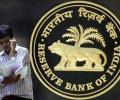
The Reserve Bank of India (RBI), on Thursday issued orders restraining commercial transactions routed through intermediaries by a card network. The central bank, without naming the card network, said the intermediary with an arrangement with the network, did not have the authorisation to function under the Payment and Settlement Systems (PSS) Act. This led the regulator to suspend the arrangement till further notice.
 © 2026 Rediff.com - Advertise with us - Disclaimer - Privacy Policy - Sitemap - Feedback - About us - Terms of use - Grievances